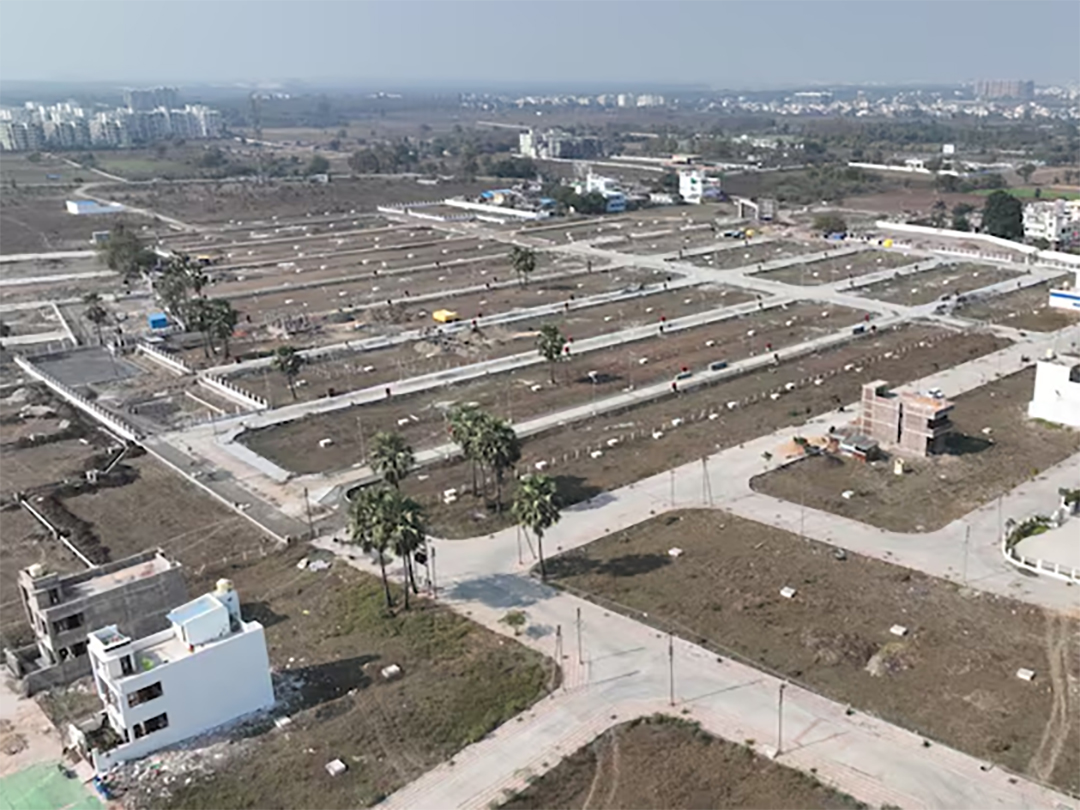
Are plotted layouts are the best way for our cities to grow? The most predominant and familiar method by which peri-urban areas are developed and cities expand is through these individual plotted layouts. Often left to the means and devices of enterprising real estate developers, these layouts are typically laid out without proper urban design or without a vision of the kind of built environment they create. But how did this approach become the standard for urban growth? More importantly, we should ask, are there alternatives to the plotted layout type of development?
The type of urban blocks define the kind of life that thrive in our neighborhoods.
The relationship between our built environment and our quality of life is more direct than one might assume. The type of neighbourhood, which is dependent on the way the buildings are built, will have an effect on the neighbourhoodly life that one experiences. For instance, our experience of community will be dependent on if we grew up living in a neighbourhood of apartments, or row houses, or in private villas. Urban configurations with more open spaces, would naturally encourage play areas, green spaces, and therefore a generally high-level of well-being.
Alternative urban block configurations
The following examples illustrate alternative urban block structures that rethink land use while maintaining the same built-up area. All the demonstrations are on a hypothetical land of size 144m x 128m (approximately 4.5 acres) and are of the same total built-up area.
Alternative 1: Row Housing
Row houses are 2-3 story buildings that share walls with their neighbors. Each plot stretches between a main street and a back service street. This traditional design is common in older neighborhoods.
Pros
- Creates a cohesive street appearance typical of historic areas
- Works well in hot climates by minimizing sun exposure
- Creates friendly, walkable neighborhoods
Cons
- Relies on courtyards and backyards for natural light and air
- Best suited for homes and small businesses only


Alternative 2: Standalone Apartment Blocks
Small apartments, usually of 4 or 5 floors with up to 8 dwellings per floor. This type of development requires larger plots, better roads, and well-laid infrastructure. Often, the best balance between density and relatability for human scale.
Pros
- Mid-rise, high-density which connects to the human scale
- Common open spaces can be provided centralised or scattered throughout the development
- There is an efficiency of scale with respect to the provision of infrastructure
- Mixed-use developments with the ground floor for public functions and common amenities can create a lively urban interface
Cons
- Given the high density of development, proper planning and provision of infrastructure, including open space and amenities must be already provided in the very beginning.
- Care needs to be taken to ensure that the open spaces are not encroached by parking. A strong sense of place and ownership over the open spaces need good urban planning capacity which is usually absent.


Alternative 3: Perimeter Block
In a perimeter block, buildings are arranged along the periphery, creating a shared open space in the middle. Buildings are typically 4-5 stories high and connect wall-to-wall, forming a consistent street facade. The central space can include private gardens and common areas.
Pros
- High-density, mid-rise development which connects to the human scale
- Wall-to-wall buildings create a unified street front enhancing street character
- Perimeter blocks can accomodate high-density while also maintaining large open spaces, community gardens etc.
Cons
- Need strict oversight and/or designed solutions to keep out people from encroaching into the common open spaces
- Requires early planning for parking, waste management and utilities
- The perimeter block is the exact opposite of plotted layouts, wherein a high degree of continuous urban planning and enforcement is required, which is absent in the Indian context.


A comparison of different urban block typologies

The above illustrations take up a hypothetical development area and showcase different types of urban configurations, and their resultant urban form, size and quality of open spaces, street character etc.
While the total built-up area in each of the types are kept the same, the quantity and quality of open spaces differ vastly in each type. It can be noted that each type of urban block configuration results in urban forms that can influence the way we live and experience our cities.
So, are individual plotted developments the only way for our cities to grow?
Can we imagine newer, better urban forms that can improve our built environment significantly?
Do we have the vision to reimagine our cities?
Do we have the urban design capability to remake our cities?